


Page 17 - EE Times Europe Magazine | April2019
P. 17
EE|Times EUROPE   17


         AUTOMOTIVE
        Maxim LiDAR Module Revs Self-Driving


        Safe Speeds

        By Maurizio Di Paolo Emilio


              he advent of self-driving has decisively expanded the pres-              Maxim Integrated’s Maurizio
              ence of laser-imaging detection and ranging (LiDAR) sensors              Gavardoni demonstrates the
              in the automotive-electronics platform. LiDAR works accord-              evaluation board for a four-
        T ing to the radar principle but uses light pulses emitted by an               channel LiDAR receiving system.
        infrared laser diode.                                                          It includes optical photodiodes
          Maxim Integrated’s new MAX40026 high-speed comparator and                    from First Sensor and Maxim’s
        MAX40660/MAX40661 high-bandwidth transimpedance amplifiers                     newly launched TIA and high-
        (TIAs) enable 15 km/h faster autonomous driving at highway speed               speed comparator.
        by doubling the bandwidth and adding 32 channels (for a total of 128           (Image: Maxim Integrated)
        instead of 96) in a LiDAR module of the same size.
        WHAT’S LIDAR?
        Along with artificial intelligence, cameras, and radar, sensors are indis-
        pensable to assisted and autonomous driving. Because they can provide
        accurate measurements of objects and detect obstacles on the road —
        fallen tree limbs, other cars, or even a child who darts out into traffic
        — LiDAR sensors have helped advance the adoption of advanced
        driver-assistance systems (ADAS) and are critical to autonomous-
        vehicle (AV) development. An AV’s perception of the surrounding
        environment must be extremely precise, which is why experimental
        robo-cars are full of sensors. The use of a laser lighting system allows
        self-driven cars to be operated under low- or no-visibility conditions
        and even in the absence of road markings.
          “LiDAR sensors are playing an increasing role in the fusion of vehicle
        sensors for their ability to provide accurate distance measurement of   Figure 3: General layout of a TIA with a reverse polarization
        objects,” said Maurizio Gavardoni, principal member of the technical   photodiode (Image: Wikipedia)
                                                              staff at Maxim Integrated. “A typical LiDAR sensor sends light pulses
                                                              that, reflected by objects and detected adequately by photodiodes,
                                                              allow you to map the surrounding environment.”
                                                                LiDAR systems are based on time of flight (ToF), which measures
                                                              precise timing events (Figure 1). The latest developments have seen
                                                              several multibeam LiDAR systems, which generate a precise, 3D image
                                                              of the environment around the vehicle. This information is used to
                                                              choose the most appropriate driving maneuvers.
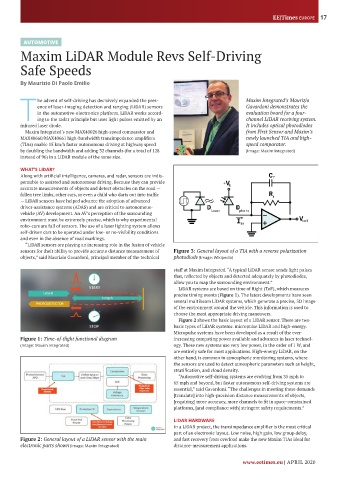
                                                                Figure 2 shows the basic layout of a LiDAR sensor. There are two
                                                              basic types of LiDAR systems: micropulse LiDAR and high-energy.
                                                              Micropulse systems have been developed as a result of the ever-
        Figure 1: Time-of-flight functional diagram           increasing computing power available and advances in laser technol-
        (Image: Maxim Integrated)                             ogy. These new systems use very low power, in the order of 1 W, and
                                                              are entirely safe for most applications. High-energy LiDAR, on the
                                                              other hand, is common in atmospheric monitoring systems, where
                                                              the sensors are used to detect atmospheric parameters such as height,
                                                              stratification, and cloud density.
                                                                “Automotive self-driving systems are evolving from 35 mph to
                                                              65 mph and beyond, but faster autonomous self-driving systems are
                                                              essential,” said Gavardoni. “The challenges in meeting these demands
                                                              [translate] into high-precision distance measurements of objects,
                                                              [requiring] more accuracy, more channels to fit in space-constrained
                                                              platforms, [and compliance with] stringent safety requirements.”
                                                              LIDAR HARDWARE
                                                              In a LiDAR project, the transimpedance amplifier is the most critical
                                                              part of an electronic layout. Low noise, high gain, low group delay,
        Figure 2: General layout of a LiDAR sensor with the main    and fast recovery from overload make the new Maxim TIAs ideal for
        electronic parts shown (Image: Maxim Integrated)      distance-measurement applications.

                                                                                      www.eetimes.eu | APRIL 2020

