


Page 45 - EE Times Europe March 2022
P. 45
EE|Times EUROPE   45

                                  Inference Sensing and In-Memory Computing Chip Startup Claims 20 TOPS/W


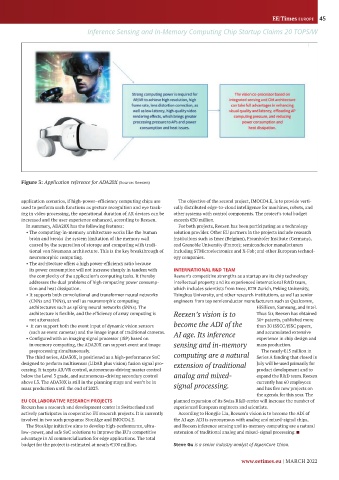
           Figure 3: Application reference for ADA20X (Source: Reexen)


           application scenarios, if high-power–efficiency computing chips are   The objective of the second project, IMOCO4.E, is to provide verti-
           used to perform such functions as gesture recognition and eye track-  cally distributed edge-to-cloud intelligence for machines, robots, and
           ing in video processing, the operational duration of AR devices can be   other systems with control components. The project’s total budget
           increased and the user experience enhanced, according to Reexen.  exceeds €30 million.
             In summary, ADA20X has the following features:        For both projects, Reexen has been participating as a technology
             •  The computing-in-memory architecture works like the human   solution provider. Other EU partners in the projects include research
              brain and breaks the system limitation of the memory wall    institutions such as Imec (Belgium), Fraunhofer Institute (Germany),
              caused by the separation of storage and computing with tradi-  and Grenoble University (France); semiconductor manufacturers
              tional von Neumann architecture. This is the key breakthrough of    including STMicroelectronics and X-Fab; and other European technol-
              neuromorphic computing.                            ogy companies.
             •  The architecture offers a high power-efficiency ratio because
              its power consumption will not increase sharply in tandem with   INTERNATIONAL R&D TEAM
              the complexity of the application’s computing tasks. It thereby   Reexen’s competitive strengths as a startup are its chip technology
              addresses the dual problems of high computing power consump-  intellectual property and its experienced international R&D team,
              tion and heat dissipation.                         which includes scientists from Imec, ETH Zurich, Peking University,
             •  It supports both convolutional and transformer neural networks   Tsinghua University, and other research institutions, as well as senior
              (CNNs and TNNs), as well as neuromorphic computing    engineers from top semiconductor manufacturers such as Qualcomm,
              architectures such as spiking neural networks (SNNs). The                       HiSilicon, Samsung, and Intel.
              architecture is flexible, and the efficiency of array computing is    Reexen’s vision is to   Thus far, Reexen has obtained
              not attenuated.                                                                 30+ patents, published more
             •   It can support both the event input of dynamic vision sensors   become the ADI of the   than 20 ISSCC/JSSC papers,
              (such as event cameras) and the image input of traditional cameras.  AI age. Its inference   and accumulated extensive
             •  Configured with an imaging signal processor (ISP) based on                    experience in chip design and
              in-memory computing, the ADA20X can support event and image   sensing and in-memory   mass production.
              preprocessing simultaneously.                                                     The nearly €15 million in
             The third series, ADA30X, is positioned as a high-performance SoC   computing are a natural   Series A funding that closed in
           designed to perform multisensor (LiDAR plus vision) fusion signal pro-  extension of traditional   July will be used primarily for
           cessing. It targets AR/VR control, autonomous-driving master control               product development and to
           below the Level 3 grade, and autonomous-driving secondary control   analog and mixed-  expand the R&D team. Reexen
           above L3. The ADA30X is still in the planning stage and won’t be in   signal processing.  currently has 60 employees
           mass production until the end of 2023.                                             and has five new projects on
                                                                                              the agenda for this year. The
           EU COLLABORATIVE RESEARCH PROJECTS                    planned expansion of its Swiss R&D center will increase the number of
           Reexen has a research and development center in Switzerland and   experienced European engineers and scientists.
           actively participates in cooperative EU research projects. It is currently   According to Hongjie Liu, Reexen’s vision is to become the ADI of
           involved in two such programs: StorAIge and IMOCO4.E.   the AI age. ADI is synonymous with analog and mixed-signal chips,
             The StorAIge initiative aims to develop high-performance, ultra-  and Reexen inference sensing and in-memory computing are a natural
           low–power, and safe SoC solutions to improve the EU’s competitive   extension of traditional analog and mixed-signal processing. ■
           advantage in AI commercialization for edge applications. The total
           budget for the project is estimated at nearly €100 million.   Steve Gu is a senior industry analyst of AspenCore China.

                                                                                         www.eetimes.eu | MARCH 2022

