


Page 51 - EETEurope FlipBook February
P. 51
EE|Times EUROPE   51
                                                        Heterogeneous Integration and the Evolution of IC Packaging


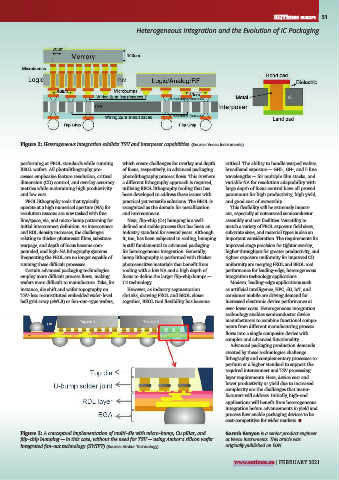
               Figure 2: Heterogeneous integration exhibits TSV and interposer capabilities. (Source: Veeco Instruments)


               performing at FEOL standards while running   which create challenges for overlay and depth   critical. The ability to handle warped wafers,
               BEOL wafers. All photolithography pro-  of focus, respectively, in advanced packaging   broadband exposure — GHI-, GH-, and I-line
               cesses emphasize feature resolution, critical   photolithography process flows. This is where   wavelengths — for multiple film stacks, and
               dimension (CD) control, and overlay accuracy   a different lithography approach is required,   variable NA for resolution adaptability with
               metrics while maintaining high productivity   utilizing BEOL lithography tooling that has   large depth of focus control have all proved
               and low cost.                       been developed to address these issues with   paramount for high productivity, high yield,
                 FEOL lithography tools that typically   practical yet versatile solutions. The BEOL is   and good cost of ownership.
               operate at a high numerical aperture (NA) for   recognized as the domain for metallization   This flexibility will be extremely import-
               resolution reasons are now tasked with fine   and interconnects.        ant, especially at outsourced semiconductor
               line/space, via, and micro-bump patterning for   Next, flip-chip (C4) bumping is a well-   assembly and test facilities. Versatility to
               initial interconnect definition. As interconnect   defined and stable process that has been an   match a variety of FEOL exposure field sizes,
               and RDL density increases, the challenges   industry standard for several years. Although   substrate sizes, and material types is also an
               relating to thicker photoresist films, substrate   it, too, has been subjected to scaling, bumping   important consideration. The requirements for
               warpage, and depth of focus become com-  is still fundamental to advanced packaging   improved stage precision for tighter overlay,
               pounded, and high-NA lithography systems   for heterogeneous integration. Generally,   higher throughput for greater productivity, and
               frequenting the FEOL are no longer capable of   bump lithography is performed with thicker   tighter exposure uniformity for improved CD
               running these difficult processes.  photosensitive materials that benefit from   uniformity are merging FEOL and BEOL tool
                 Certain advanced packaging technologies   tooling with a low NA and a high depth of   performance for leading-edge, heterogeneous
               employ more difficult process flows, making   focus to define the larger flip-chip bumps —   integration technology applications.
               wafers more difficult to manufacture. Take, for   C4 technology.          Modern, leading-edge applications such
               instance, die shift and wafer topography on   However, as industry segmentation   as artificial intelligence, HPC, 5G, IoT, and
               TSV-less reconstituted embedded wafer-level   shrinks, drawing FEOL and BEOL closer   consumer mobile are driving demand for
               ball grid array (eWLB) or fan-out–type wafers,   together, BEOL tool flexibility has become   increased electronic device performance at
                                                                                       ever-lower costs. Heterogeneous integration
                                                                                       technology enables semiconductor device
                                                                                       manufacturers to combine functional compo-
                                                                                       nents from different manufacturing process
                                                                                       flows into a single composite device with
                                                                                       complex and advanced functionality.
                                                                                         Advanced packaging production demands
                                                                                       created by these technologies challenge
                                                                                       lithography and complementary processes to
                                                                                       perform at a higher standard to support the
                                                                                       required interconnect and TSV processing
                                                                                       layer requirements. Here, device cost and
                                                                                       lower productivity or yield due to increased
                                                                                       complexity are the challenges that manu-
                                                                                       facturers will address. Initially, high-end
                                                                                       applications will benefit from heterogeneous
                                                                                       integration before advancements in yield and
                                                                                       process flow enable packaging devices to be
                                                                                       cost-competitive for wider markets. ■
               Figure 3: A conceptual implementation of multi-die with micro-bump, Cu pillar, and   Gareth Kenyon is a senior product engineer
               flip-chip bumping — in this case, without the need for TSV — using Amkor’s silicon wafer   at Veeco Instruments. This article was
               integrated fan-out technology (SWIFT) (Source: Amkor Technology)        originally published on EDN.

                                                                                          www.eetimes.eu | FEBRUARY 2021

