


Page 33 - 23_EETE_03
P. 33
EE|Times EUROPE   33

                                                       Green Electricity Key to Eliminating Transportation CO   2


                                                                                      Electricity Production: 2050
                                                  Electricity Production: 2035       • Renewables: Over 95%
                                                 • Renewables: 85-90%                • Fossil fuels: Under 5%
                                                 • Fossil fuels: 10-15%
                Electricity Production: 2020                                          Electric Transportation: 2050
               • Renewables: 70-75%                                                  • Battery EVs: Over 90%
               • Fossil fuels: 25-30%             Electric Transportation: 2035      • Plug-in hybrid EVs: <1%
                                                 • Battery EVs: 70-80%               • Fuel-cell EVs: 3-4%
                                                 • Plug-in hybrid EVs: 5-10%         • Electric ships: 4-6%
               Electric Transportation: 2020     • Fuel-cell EVs: 0.5%               • Electric trains: 85%+
               • Battery EVs: 3-5%               • Electric ships: 1-2%
               • Plug-in hybrid EVs: 2-5%        • Electric trains: 65-70%           ICE & Low-Carbon Fuel: 2050
               • Fuel-cell EVs: < 0.1%                                               • Hydrogen: 18-22%
               • Electric trains: 55-60%                                             • Synthetic fuel: 10-12%
                                                 ICE & Low-Carbon Fuel: 2035         • Biofuels: 20-25%
                                                 • Hydrogen: 3-5%
               ICE & Low-Carbon Fuel: 2020       • Synthetic fuel: 2-3%
               • Hydrogen: < 0.1%                • Biofuels: 10-12%                    ICE & Fossil Fuels: 2050
               • Synthetic fuel: < 0.1%                                              • Gas-diesel engine: 20-30%
               • Biofuels: 3-5%                                                      • Ship diesel engine: 35-40%
                                                   ICE & Fossil Fuels: 2035          • Train diesel electric: 10-15%
                                                 • Gas-diesel engine: 50-55%         • Airplane jet engine: 45-50%
                 ICE & Fossil Fuels: 2020
               • Gas-diesel engine: 90-95%       • Ship diesel engine: 80-85%           Based on vehicles, ships,
                                                 • Train diesel electric: 30-35%
               • Ship diesel engine: 99-100%     • Airplane jet engine: 85-90%          trains, airplanes in use
               • Train diesel electric: 40-45%
               • Airplane jet engine: 100%
                       2020s                   2030s                  2040s                   2050s      Time
               Source: Egil Juliussen; January 2023  Data Source: DNV 2022 report data & estimates by Egil Juliussen


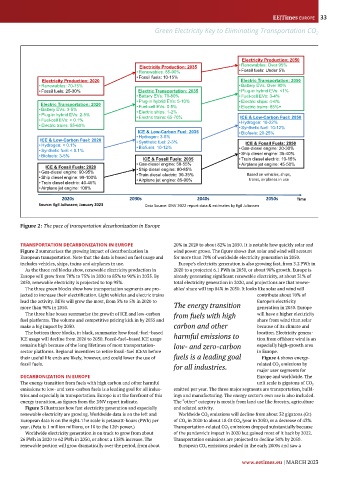
        Figure 2: The pace of transportation decarbonization in Europe


        TRANSPORTATION DECARBONIZATION IN EUROPE              20% in 2020 to about 82% in 2050. It is notable how quickly solar and
        Figure 2 summarizes the growing impact of decarbonization in   wind power grows. The figure shows that solar and wind will account
        European transportation. Note that the data is based on fuel usage and   for more than 70% of worldwide electricity generation in 2050.
        includes vehicles, ships, trains and airplanes in use.  Europe’s electricity generation is also growing fast, from 3.2 PWh in
          As the three red blocks show, renewable electricity production in   2020 to a projected 6.1 PWh in 2050, or about 90% growth. Europe is
        Europe will grow from 70% to 75% in 2020 to 85% to 90% in 2035. By   already generating significant renewable electricity, at about 31% of
        2050, renewable electricity is projected to top 95%.  total electricity generation in 2020, and projections are that renew-
          The three green blocks show how transportation segments are pro-  ables’ share will top 84% in 2050. It looks like solar and wind will
        jected to increase their electrification. Light vehicles and electric trains       contribute about 70% of
        lead the activity. BEVs will grow the most, from 3% to 5% in 2020 to               Europe’s electricity
        more than 90% in 2050.                                The energy transition        generation in 2050. Europe
          The three blue boxes summarize the growth of ICE and low-carbon   from fuels with high   will have a higher electricity
        fuel platforms. The volume and competitive pricing kick in by 2035 and             share from wind than solar
        make a big impact by 2050.                            carbon and other             because of its climate and
          The bottom three blocks, in black, summarize how fossil-fuel–based   harmful emissions to   location. Electricity genera-
        ICE usage will decline from 2020 to 2050. Fossil-fuel–based ICE usage              tion from offshore wind is an
        remains high because of the long lifetimes of most transportation-   low- and zero-carbon   especially high-growth area
        sector platforms. Regional incentives to retire fossil-fuel ICEVs before           in Europe.
        their useful life ends are likely, however, and could lower the use of   fuels is a leading goal   Figure 4 shows energy-
        fossil fuels.                                                                      related CO 2  emissions by
                                                              for all industries.          major user segments for
        DECARBONIZATION IN EUROPE                                                          Europe and worldwide. The
        The energy transition from fuels with high carbon and other harmful                unit scale is gigatons of CO 2
        emissions to low- and zero-carbon fuels is a leading goal for all indus-  emitted per year. The three major segments are transportation, build-
        tries and especially in transportation. Europe is at the forefront of this   ings and manufacturing. The energy sector’s own use is also included.
        energy transition, as figures from the DNV report indicate.  The “other” category is mostly from land use like forestry, agriculture
          Figure 3 illustrates how fast electricity generation and especially   and related activity.
        renewable electricity are growing. Worldwide data is on the left and   Worldwide CO 2  emissions will decline from about 32 gigatons (Gt)
        European data is on the right. The scale is petawatt-hours (PWh) per   of CO 2  in 2020 to about 18 Gt CO 2 /year in 2050, or a decrease of 43%.
        year. (Peta is 1 million millions, or 10 to the 12th power.)  Transportation-related CO 2  emissions dropped substantially because
          Worldwide electricity generation is on track to grow from about    of the pandemic’s impact in 2020 but gained most of it back by 2022.
        26 PWh in 2020 to 62 PWh in 2050, or about a 138% increase. The   Transportation emissions are projected to decline 30% by 2050.
        renewable portion will grow dramatically over the period, from about   European CO 2  emissions peaked in the early 2000s and saw a

                                                                                      www.eetimes.eu | MARCH 2023

