


Page 7 - 23_EETE_03
P. 7
EE|Times EUROPE   7
                                                   Contactless Measurement of Vital Signs with Radar Sensors


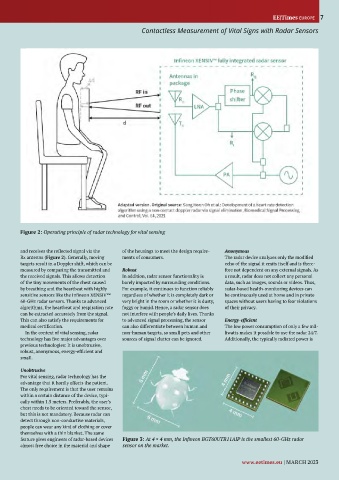
        Figure 2: Operating principle of radar technology for vital sensing


        and receives the reflected signal via the   of the housings to meet the design require-  Anonymous
        Rx antenna (Figure 2). Generally, moving   ments of consumers.          The radar device analyzes only the modified
        targets result in a Doppler shift, which can be                         echo of the signal it emits itself and is there-
        measured by comparing the transmitted and   Robust                      fore not dependent on any external signals. As
        the received signals. This allows detection   In addition, radar sensor functionality is   a result, radar does not collect any personal
        of the tiny movements of the chest caused   barely impacted by surrounding conditions.   data, such as images, sounds or videos. Thus,
        by breathing and the heartbeat with highly   For example, it continues to function reliably   radar-based health-monitoring devices can
        sensitive sensors like the Infineon XENSIV™   regardless of whether it is completely dark or   be continuously used at home and in private
        60-GHz radar sensors. Thanks to advanced   very bright in the room or whether it is dusty,   spaces without users having to fear violations
        algorithms, the heartbeat and respiration rate   foggy or humid. Hence, a radar sensor does   of their privacy.
        can be extracted accurately from the signal.   not interfere with people’s daily lives. Thanks
        This can also satisfy the requirements for   to advanced signal processing, the sensor   Energy-efficient
        medical certification.              can also differentiate between human and   The low power consumption of only a few mil-
          In the context of vital sensing, radar   non-human targets, so small pets and other   liwatts makes it possible to use the radar 24/7.
        technology has five major advantages over   sources of signal clutter can be ignored.  Additionally, the typically radiated power is
        previous technologies: It is unobtrusive,
        robust, anonymous, energy-efficient and
        small.
        Unobtrusive
        For vital sensing, radar technology has the
        advantage that it hardly affects the patient.
        The only requirement is that the user remains
        within a certain distance of the device, typi-
        cally within 1.5 meters. Preferably, the user’s
        chest needs to be oriented toward the sensor,
        but this is not mandatory. Because radar can
        detect through non-conductive materials,
        people can wear any kind of clothing or cover
        themselves with a thin blanket. The same
        feature gives engineers of radar-based devices   Figure 3: At 4 × 4 mm, the Infineon BGT60UTR11AIP is the smallest 60-GHz radar
        almost free choice in the material and shape   sensor on the market.

                                                                                      www.eetimes.eu | MARCH 2023

