


Page 54 - EE Times Europe Magazine | April2019
P. 54
54 EE|Times EUROPE — Boards & Solutions Insert

        Thermal and Vibration Energy Powers IoT Devices


                                                                                  Design considerations for thermoelec-
                                                                                tric-energy–harvesting systems “include
                                                                                electrical and thermal requirements, ther-
                                                                                moelectric materials, application-specific
                                                                                considerations, durability targets, selling price,
                                                                                and engineering budget,” said Piggott.
                                                                                  Vibrations are a ubiquitous energy source.
                                                                                Every car on the road creates vibrations on the
                                                                                asphalt and in the cab. Given the number of
                                                                                cars on the world’s motorways, the appeal of
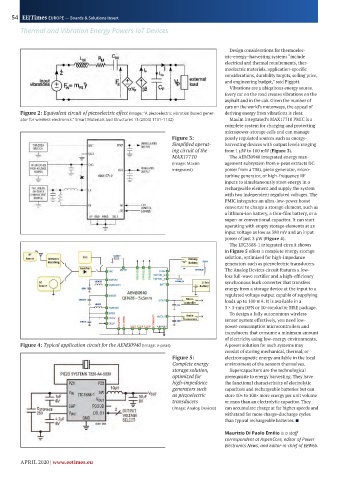
        Figure 2: Equivalent circuit of piezoelectric effect (Image: “A piezoelectric vibration based gener-  deriving energy from vibrations is clear.
        ator for wireless electronics.” Smart Materials and Structures 13 (2004) 1131–1142)  Maxim Integrated’s MAX17710 PMIC is a
                                                                                complete system for charging and protecting
                                                                                micropower-storage cells and can manage
                                                             Figure 3:          poorly regulated sources such as energy-
                                                             Simplified operat-  harvesting devices with output levels ranging
                                                             ing circuit of the   from 1 µW to 100 mW (Figure 3).
                                                             MAX17710             The AEM30940 integrated energy man-
                                                             (Image: Maxim      agement subsystem from e-peas extracts DC
                                                             Integrated)        power from a TEG, piezo generator, micro-
                                                                                turbine generator, or high-frequency RF
                                                                                inputs to simultaneously store energy in a
                                                                                rechargeable element and supply the system
                                                                                with two independent regulated voltages. The
                                                                                PMIC integrates an ultra-low-power boost
                                                                                converter to charge a storage element, such as
                                                                                a lithium-ion battery, a thin-film battery, or a
                                                                                super- or conventional capacitor. It can start
                                                                                operating with empty storage elements at an
                                                                                input voltage as low as 380 mV and an input
                                                                                power of just 3 µW (Figure 4).
                                                                                  The LTC3588-1 integrated circuit shown
                                                                                in Figure 5 offers a complete energy storage
                                                                                solution, optimized for high-impedance
                                                                                generators such as piezoelectric transducers.
                                                                                The Analog Devices circuit features a low-
                                                                                loss full-wave rectifier and a high-efficiency
                                                                                synchronous buck converter that transfers
                                                                                energy from a storage device at the input to a
                                                                                regulated voltage output capable of supplying
                                                                                loads up to 100 mA. It is available in a
                                                                                3 × 3-mm DFN or 10-conductor MSE package.
                                                                                  To design a fully autonomous wireless
                                                                                sensor system effectively, you need low-
                                                                                power-consumption microcontrollers and
                                                                                transducers that consume a minimum amount
                                                                                of electricity using low-energy environments.
        Figure 4: Typical application circuit for the AEM30940 (Image: e-peas)  A power solution for such systems may
                                                                                consist of storing mechanical, thermal, or
                                                              Figure 5:         electromagnetic energy available in the local
                                                              Complete energy   environment of the sensors themselves.
                                                              storage solution,   Supercapacitors are the technological
                                                              optimized for     prerequisite to energy harvesting. They have
                                                              high-impedance    the functional characteristics of electrolytic
                                                              generators such    capacitors and rechargeable batteries but can
                                                              as piezoelectric   store 10× to 100× more energy per unit volume
                                                              transducers       or mass than an electrolytic capacitor. They
                                                              (Image: Analog Devices)  can accumulate charge at far higher speeds and
                                                                                withstand far more charge-discharge cycles
                                                                                than typical rechargeable batteries. ■
                                                                                Maurizio Di Paolo Emilio is a staff
                                                                                correspondent at AspenCore, editor of Power
                                                                                Electronics News, and editor-in-chief of EEWeb.

        APRIL 2020 | www.eetimes.eu

