


Page 39 - EETEurope FlipBook February
P. 39
EE|Times EUROPE — Power Electronics  39
                                                                  GaN Evaluation Board for AC/DC Power Conversion


               to develop control firmware, as is required for
               solutions based on digital signal controllers.
                 The GaN-based platform provides the
               reliability of wide-bandgap semiconductor
               physics and ensures ease of design drive-
               ability and high-volume reproducibility.
               Transphorm said its approach offers designers
               a more efficient power supply system than
               is achievable with standard continuous con-
               duction mode (CCM) boost PFC designs using
               superjunction MOSFETs.
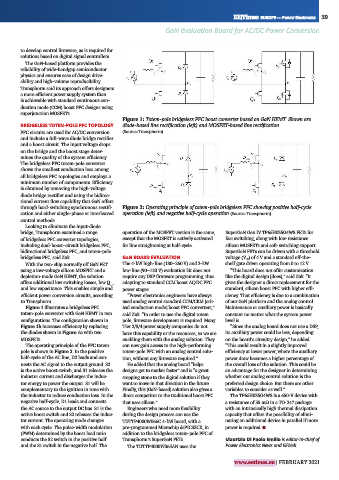
                                                   Figure 1: Totem-pole bridgeless PFC boost converter based on GaN HEMT. Shown are
               BRIDGELESS TOTEM-POLE PFC TOPOLOGY  diode-based line rectification (left) and MOSFET-based line rectification.
               PFC circuits are used for AC/DC conversion   (Source: Transphorm)
               and include a full-wave diode bridge rectifier
               and a boost circuit. The input voltage drops
               on the bridge and the boost stage deter-
               mines the quality of the system efficiency.
               The bridgeless PFC totem-pole converter
               shows the smallest conduction loss among
               all bridgeless PFC topologies and employs a
               minimum number of components. Efficiency
               is obtained by removing the high-voltage
               diode bridge rectifier and using the bidirec-
               tional current flow capability that GaN offers
               through hard-switching synchronous rectifi-  Figure 2: Operating principle of totem-pole bridgeless PFC showing positive half-cycle
               cation and either single-phase or interleaved   operation (left) and negative half-cycle operation (Source: Transphorm)
               control methods.
                 Looking to eliminate the input-diode
               bridge, Transphorm examined a range   operation of the MOSFET version is the same,   SuperGaN Gen IV TP65H035G4WS FETs for
               of bridgeless PFC converter topologies,   except that the MOSFET is actively activated   fast switching, along with low-resistance
               including dual-boost–circuit bridgeless PFC,   for line straightening at half-cycle.  silicon MOSFETs and soft-switching support.
               bidirectional bridgeless PFC, and totem-pole                            SuperGaN FETs can be driven with a threshold
 POWER ELECTRONICS  bridgeless PFC, said Zuk.      GaN BOARD EVALUATION                voltage (V ) of 4 V and a standard off-the-
                                                                                              th
                 With the two-chip normally off GaN FET
 GaN Evaluation Board for AC/DC Power Conversion  using a low-voltage silicon MOSFET and a   The 4-kW high-line (180–260 V) and 2-kW   shelf gate driver operating from 0 to 12 V.
                                                   low-line (90–120 V) evaluation kit does not
                                                                                         “This board does not offer customization
                                                                                       like the digital design [does],” said Zuk. “It
               depletion-mode GaN HEMT, the solution
                                                   require any DSP firmware programming, thus
 By Maurizio Di Paolo Emilio  offers additional low switching losses, low Q ,   adapting to standard CCM boost AC/DC PFC   gives the designer a direct replacement for the
                                               rr
               and low capacitance. This enables simple and   power stages.            standard, silicon boost PFC with higher effi-
               efficient power conversion circuits, according   “Power electronics engineers have always   ciency. That efficiency is due to a combination
               to Transphorm.                      used analog control standard CCM/CRM [crit-  of our GaN platform and the analog control.
                 Figure 1 illustrates a bridgeless PFC   ical conduction mode] boost PFC converters,”   Maintenance or auxiliary power is basically
               totem-pole converter with GaN HEMT in two   said Zuk. “In order to use the digital totem   constant no matter what the system power
               configurations. The configuration shown in   pole, firmware development is required. Many   level is.
               Figure 1b increases efficiency by replacing   Tier 2/3/4 power supply companies do not   “Since the analog board does not use a DSP,
               the diodes shown in Figure 1a with two   have this capability or the resources, so we are   its auxiliary power could be less, depending
               MOSFETs.                            enabling them with the analog solution. They   on the board’s circuitry design,” he added.
                 The operating principle of the PFC totem   can now gain access to the high-performing   “This could result in a slightly improved
               pole is shown in Figure 2. In the positive   totem-pole PFC with an analog control solu-  efficiency at lower power, where the auxiliary
               half-cycle of the AC line, D2 leads and con-  tion, without any firmware required.”  power draw becomes a higher percentage of
               nects the AC signal to the output ground. S2   He added that the analog board “helps   the overall loss of the solution. This could be
               is the active boost switch, and S1 releases the   designs get to market faster” and is “a great   an advantage for the designer in determining
               inductor current and discharges the induc-  stepping stone to the digital solution if they   whether our analog control solution is the
               tor energy to power the output. S1 will be   want to move in that direction in the future.   preferred design choice. But there are other
               complementary to the ignition in tune with   Finally, this [GaN-based] solution also gives a   variables to consider as well.”
               the inductor to reduce conduction loss. In the   direct competitor to the traditional boost PFC   The TP65H035G4WS is a 650-V device with
               negative half-cycle, D1 leads and connects   that uses silicon.”        a resistance of 35 mΩ in a TO-247 package
               the AC source to the output DC bus. S1 is the   Engineers who need more flexibility   with an intrinsically high thermal dissipation
               active boost switch and S2 releases the induc-  during the design process can use the   capacity that offers the possibility of elimi-
               tor current. The operating mode changes   TDTTP4000W066C 4-kW board, with a   nating an additional device in parallel if more
               with each cycle. The pulse-width modulation   pre-programmed Microchip dsPIC33CK, in   power is required. ■
               (PWM) determined by the boost load ratio   addition to the bridgeless totem-pole PFC of
               conducts the S2 switch in the positive half   Transphorm’s SuperGaN FETs.  Maurizio Di Paolo Emilio is editor-in-chief of
               and the S1 switch in the negative half. The   The TDTTP4000W065AN uses the   Power Electronics News and EEWeb.


                                                                                          www.eetimes.eu | FEBRUARY 2021

