


Page 10 - PEN eBook February 2024
P. 10
SEMICONDUCTORS                                                                                                                                                                                                  SEMICONDUCTORS

                                                                                                                                 The lower deadtime losses can also translate into    Building on this experience, Nexperia is introducing
                                                                                                                                 improved reliability in reverse conduction, compared   Cu-clip packages for its 650-V GaN power devices.
                                                                                                                                 with degradation from potentially high losses in the   This package is called the CCPAK1212, the numbers
                                                                                                                                 e-mode GaN case and body diode degradation in the   designating the 12 × 12-mm size. As shown in Figure 4,
                                                                                                                                 SiC MOSFET.                                         both bottom-side– and top-side–cooled CCPAK1212
                                                                                                                                                                                     package offerings are planned. In the case of the


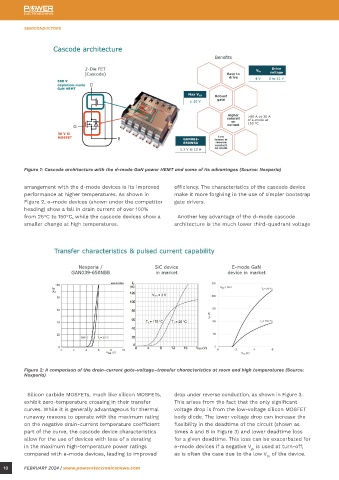
          Figure 1: Cascode architecture with the d-mode GaN power HEMT and some of its advantages (Source: Nexperia)


          arrangement with the d-mode devices is its improved   efficiency. The characteristics of the cascode device
          performance at higher temperatures. As shown in     make it more forgiving in the use of simpler bootstrap
          Figure 2, e-mode devices (shown under the competitor   gate drivers.
          heading) show a fall in drain current of over 100%
          from 25°C to 150°C, while the cascode devices show a   Another key advantage of the d-mode cascode
          smaller change at high temperatures.                architecture is the much lower third-quadrant voltage              Figure 3: A comparison of the reverse-current voltage drop and the reverse characteristics of the cascode device across
                                                                                                                                 temperature (Source: Nexperia)


                                                                                                                                 Cu-CLIP PACKAGES FOR GaN                            top-side–cooled option, the device is flipped and the
                                                                                                                                  Nexperia has over 20 years of experience in the use   source-cooling tab is on top. This can offer flexibility in
                                                                                                                                 of Cu-clip packages for silicon MOSFET devices. This   the use of the PCB space and can further improve heat
                                                                                                                                 package is called the LFPAK. Over 1.7 billion LFPAK   dissipation.
                                                                                                                                 devices were shipped in 2021, showing the vast
                                                                                                                                 acceptance of this package across many applications,   Some of the main advantages of the Cu-clip package
                                                                                                                                 including automotive.                               compared with other packages are:


          Figure 2: A comparison of the drain-current gate-voltage–transfer characteristics at room and high temperatures (Source:
          Nexperia)


           Silicon carbide MOSFETs, much like silicon MOSFETs,   drop under reverse conduction, as shown in Figure 3.
          exhibit zero-temperature crossing in their transfer   This arises from the fact that the only significant
          curves. While it is generally advantageous for thermal   voltage drop is from the low-voltage silicon MOSFET
          runaway reasons to operate with the maximum rating   body diode. The lower voltage drop can increase the
          on the negative drain-current temperature coefficient   flexibility in the deadtime of the circuit (shown as
          part of the curve, the cascode device characteristics   times A and B in Figure 3) and lower deadtime loss
          allow for the use of devices with less of a derating   for a given deadtime. This loss can be exacerbated for
          in the maximum high-temperature power ratings       e-mode devices if a negative V  is used at turn-off,
                                                                                         gs
          compared with e-mode devices, leading to improved   as is often the case due to the low V  of the device.              Figure 4: CCPAK1212 package offerings on 650-V GaN power devices by Nexperia (Source: Nexperia)
                                                                                               th
  10      FEBRUARY 2024 | www.powerelectronicsnews.com                                                                                                                                        FEBRUARY 2024 | www.powerelectronicsnews.com  11

